
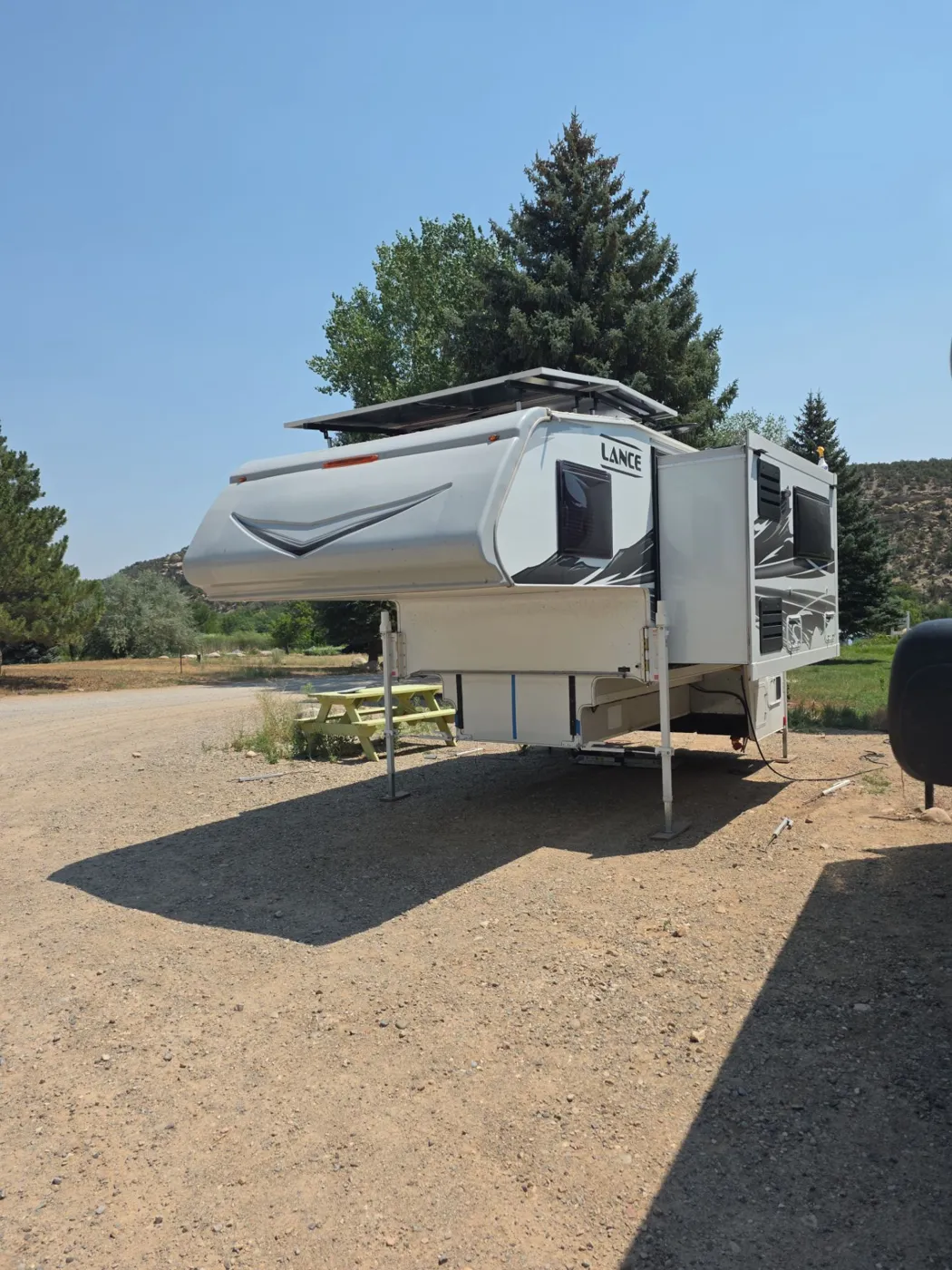
By Scott Yates, RVTAA Certified RV Service Technician and Certified Solar Technician & Installer (#4554), Live Free Mobile RV, Yuma, AZ
Short version: Amy wanted a Victron power system for her 2019 Lance truck camper. The first design, with a larger array and a rooftop air conditioner, came in well above her budget. Instead of lowering the build standard, we reduced the scope: a 24V Victron system with room to grow that reuses the solar panels she already owned. Dan Hemmings of RV Solar Consulting reviewed the design, and we installed it from August 4 to 10, 2026.
The system
| Part | What we installed |
|---|---|
| Battery | 24V 300Ah lithium (about 7.2 kWh usable) |
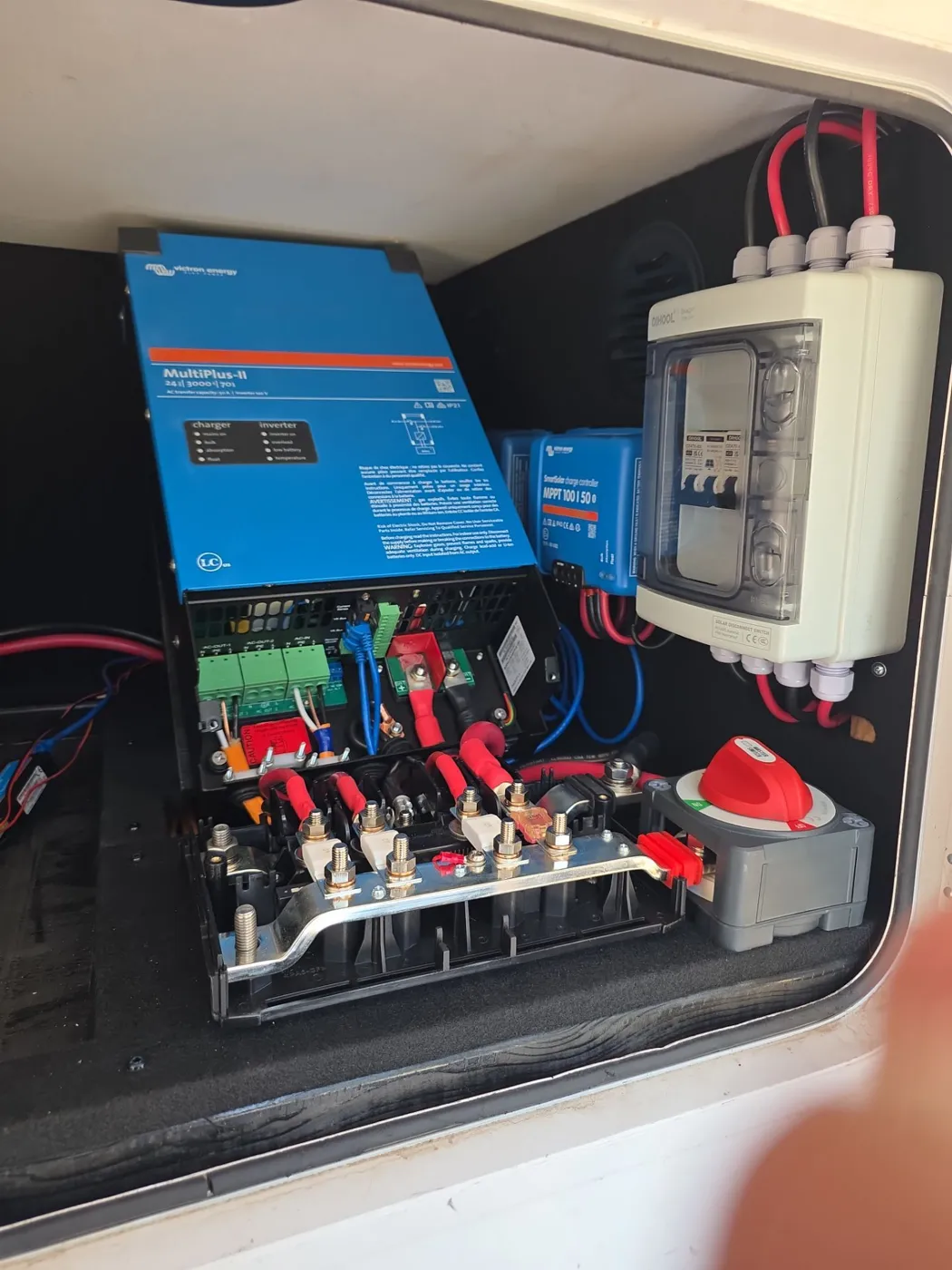
| Inverter/charger | Victron MultiPlus-II 24/3000/70-50 |
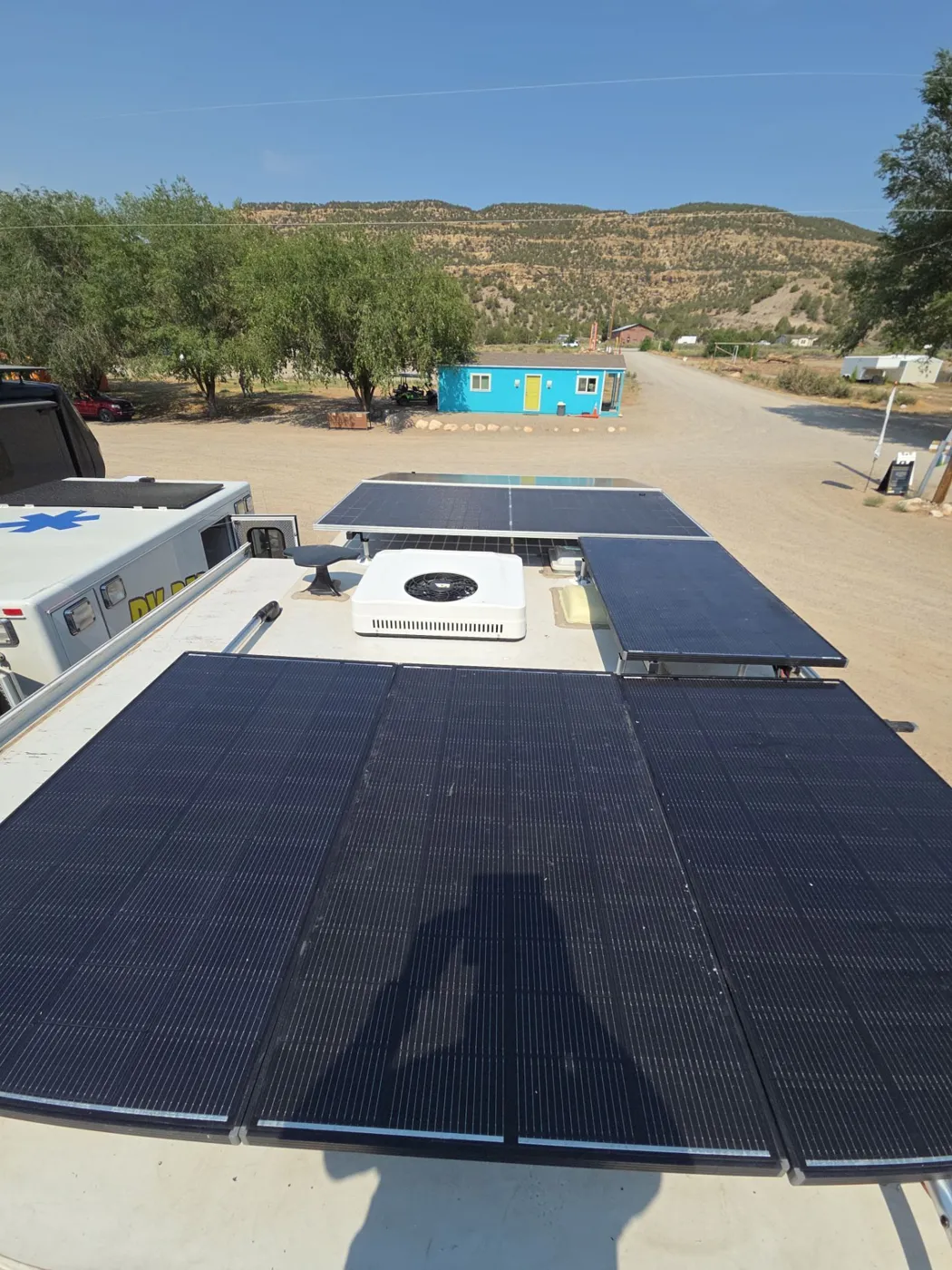
| Solar | 1,980 W total: two new 590 W bifacial panels plus four of Amy’s existing 200 W panels, rearranged on the roof |
| Solar charge controllers | Victron SmartSolar MPPT 100/50 for the new panels, SmartSolar MPPT 100/30 for the existing panels |
| Distribution and protection | Victron Lynx Distributor, Class-T main fuse, 400 A main disconnect, solar PV disconnects |
| Monitoring | Victron Cerbo GX with GX Touch 70 display, SmartShunt |
| Also installed | Starlink Mini mounted on the solar rail |
Designing to a budget without cutting corners
The first proposal included four new panels, two charge controllers, a rooftop air conditioner and our full as-built documentation package. When that didn’t fit Amy’s budget, we kept what matters most for the long run and removed what could be added later:
- Kept: the Victron equipment, the full equipment-bay build, the protection and monitoring, and spare capacity in the Lynx Distributor for future expansion.
- Reused: four of Amy’s existing 200 W panels, so her earlier investment kept working.
- Left for later: additional new panels, the air conditioner and the expanded documentation package.
The result is a smaller system that is still built to our full standard and can grow when she’s ready.
Measured before we designed
Before any design was final, we inspected the camper twice, on June 19 and June 30. We photographed the existing array and wiring, read the labels on every panel, and measured roof clearances, rail heights and the rear storage compartment with a tape and level. Those measurements decided where each new and relocated panel could go, how high the rails had to sit to clear the roof fixtures, and how the equipment bay would fit. Nothing was ordered until the layout was confirmed on the actual roof.
Building the equipment bay
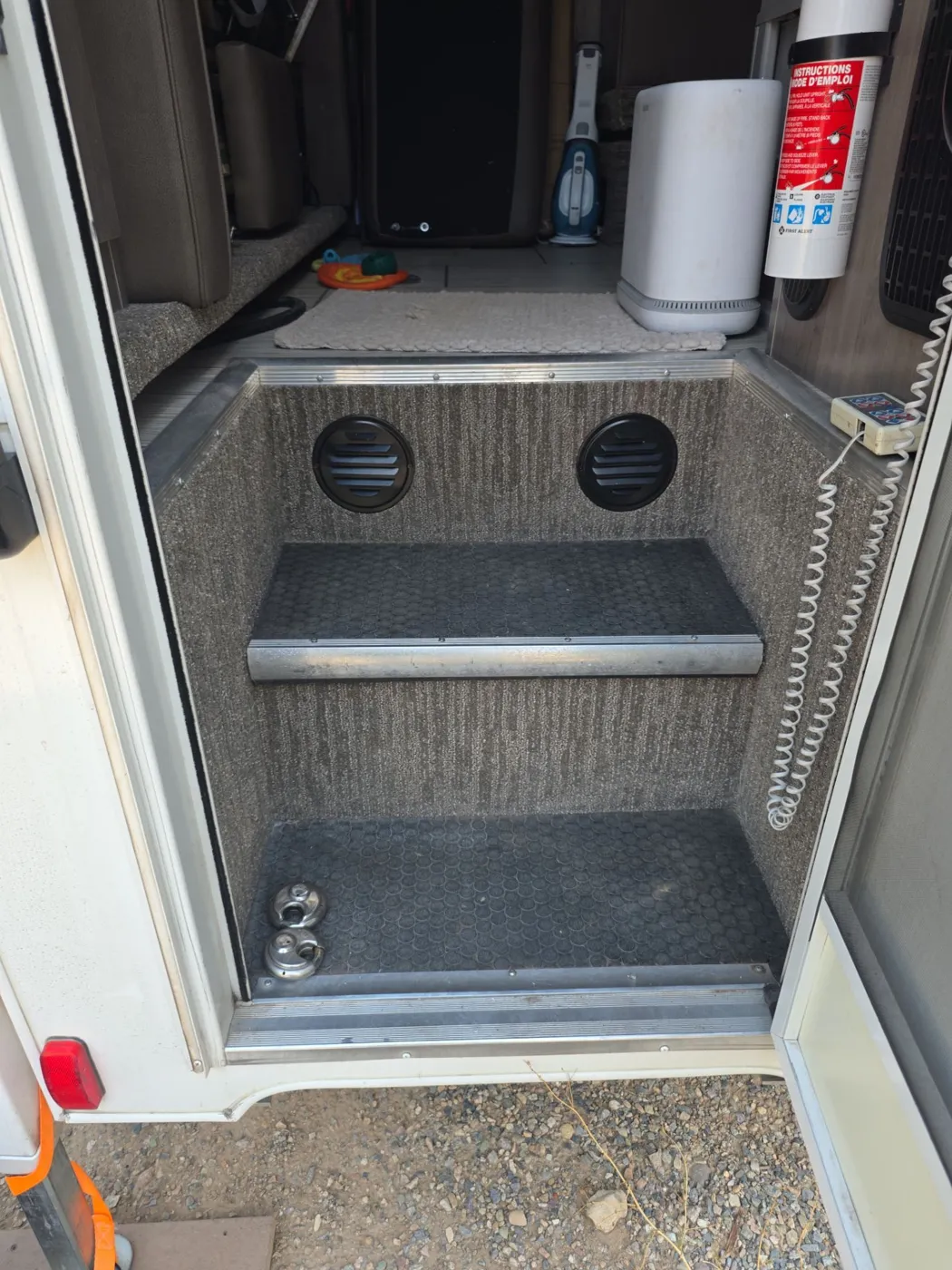
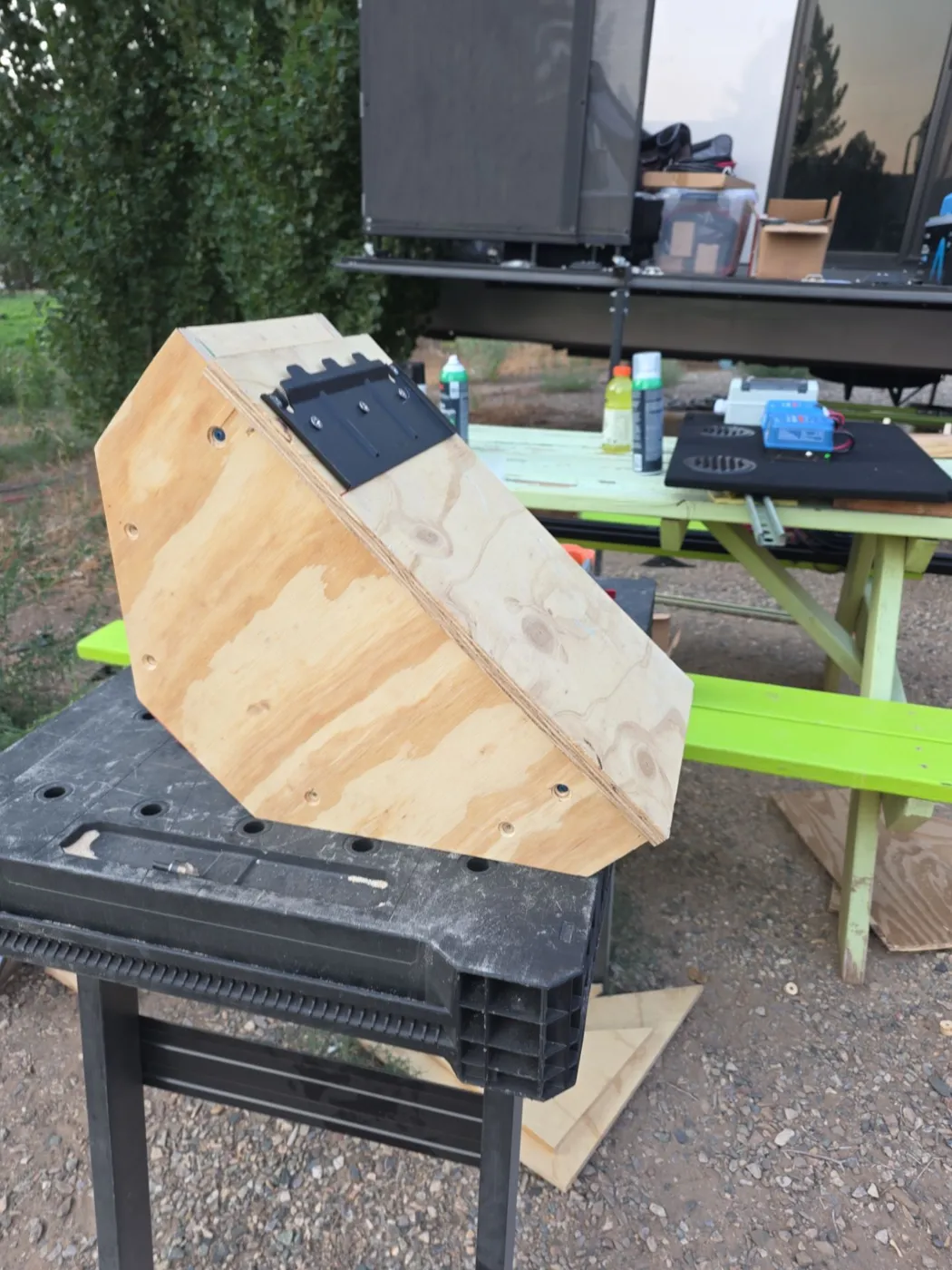
We turned the camper’s rear storage compartment into a proper equipment bay: an electro-galvanized strut frame, a carpeted 3/4-inch plywood floor and equipment panel, and passive vents into the interior stair cavity so heat from the inverter and batteries can move out. Everything is laid out so it can be reached for service and has room for expansion.
The roof
- The two new 590 W panels mount on Tamarack rails with IronRidge supports.
- One of Amy’s existing front panels moved onto a passenger-side rail extension behind the new panels. The other moved to the existing rear mount, which now holds three panels across.
- The Starlink Mini mounts on a driver-side rail extension, so it needed no extra holes in the roof.
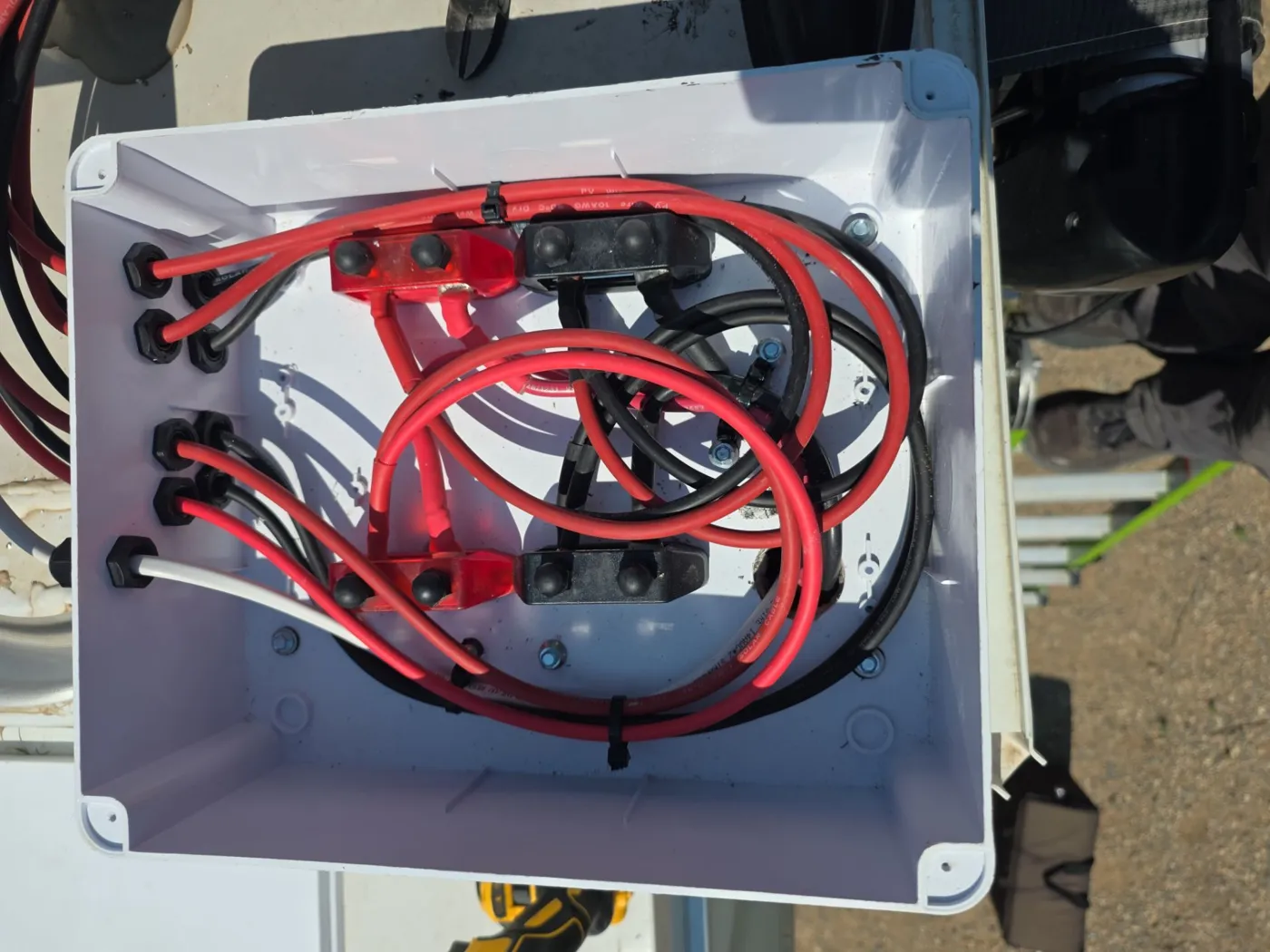
- All roof wiring runs through a sealed junction box.
Keeping the original 12V system
Amy’s original 12V battery and converter stay in place for the camper’s factory 12V loads. They are fully independent of the new 24V system, which keeps both simple to service.
Since the install
As of late September 2026, Amy reported no issues and is happy with the system. Because Dan and Live Free Mobile RV share access to the builds we work on together, either of us can look at her system and support her if she needs it.
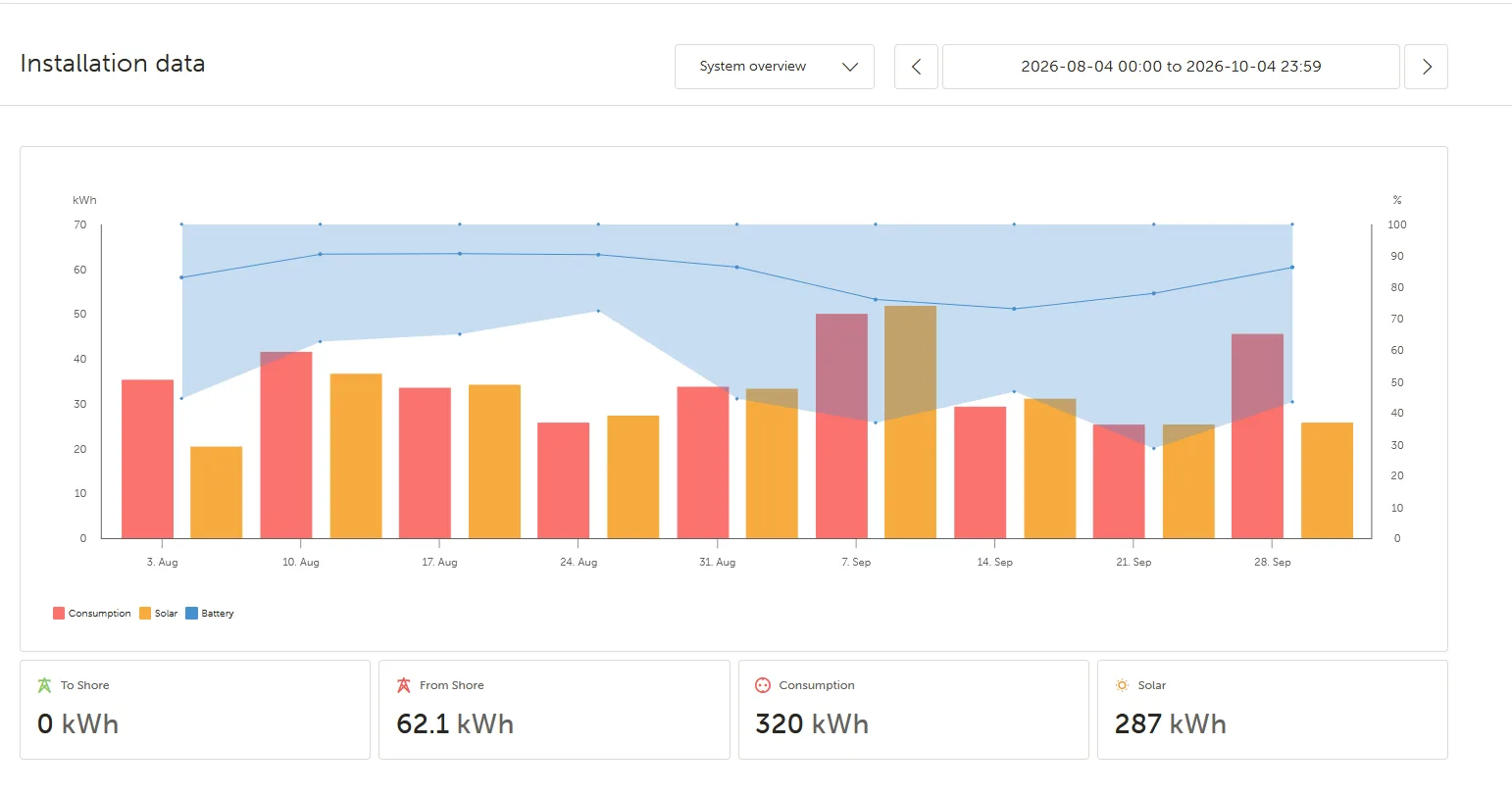
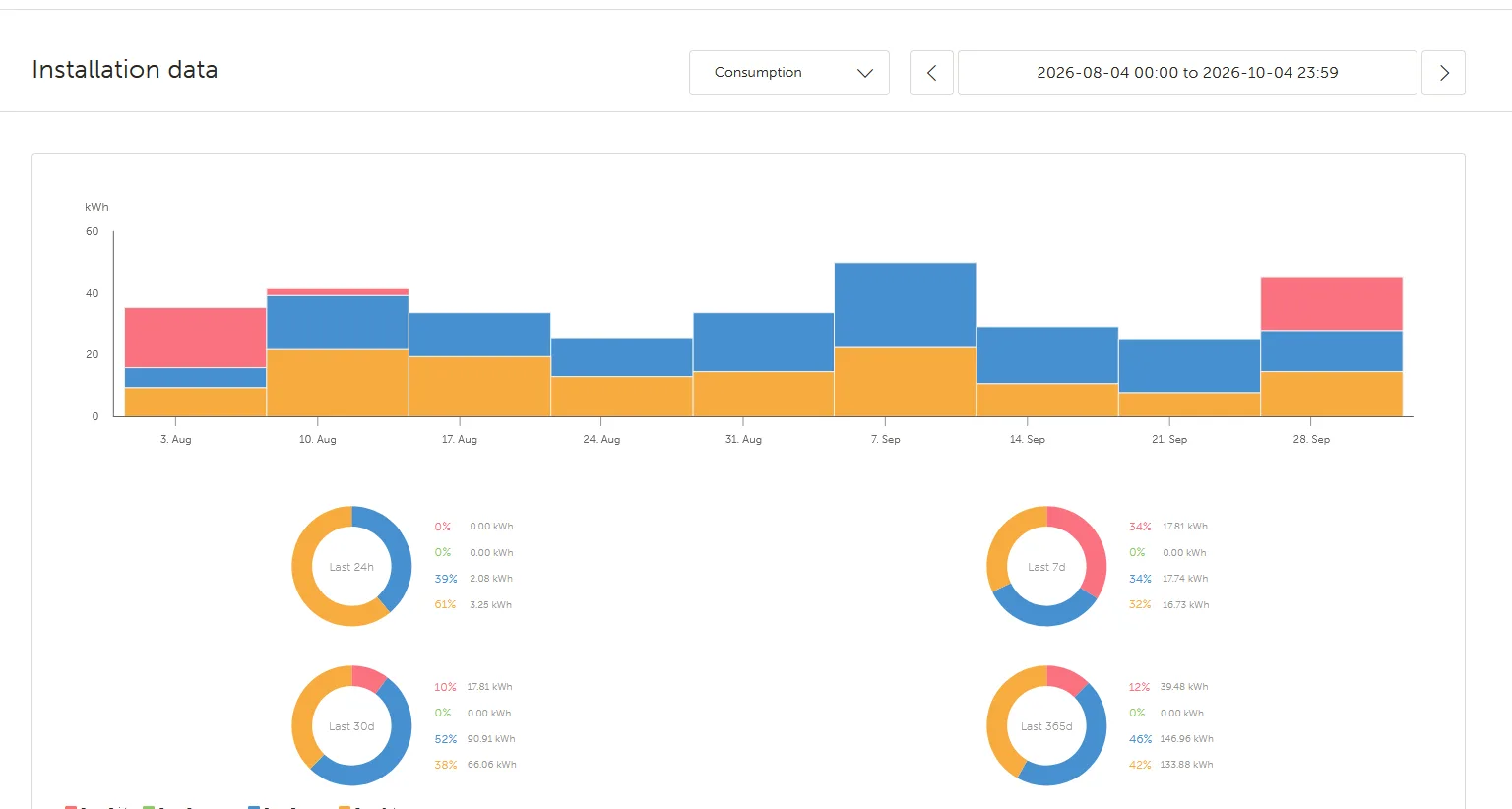
By the numbers (Victron VRM, August 4 to October 4, 2026):
| Total energy the camper used | 320 kWh |
| Solar produced | 287 kWh (153 kWh stored in the battery, 134 kWh used directly) |
| Shore power used | 62 kWh |
| Generator | 0 kWh |
| Share of incoming power from solar | about 82% |
What stands out:
- Five straight weeks on solar alone. From mid-August to mid-September, the camper used no shore power at all.
- Most of the shore power came during the install. The camper was plugged in at the resort while we built and commissioned the system; the rest came in late September.
- The generator never ran.
- About 4.6 kWh of solar a day from a 1,980 W array, through August and September.
Because the system logs everything to Victron VRM, these numbers come straight from the equipment, not from an estimate.
Designed with RV Solar Consulting
Dan Hemmings of RV Solar Consulting reviewed the design before it went to Amy; Live Free Mobile RV built and installed it.
Have a budget in mind?
We’ll design to it without lowering the standard. Learn more about our RV solar installation and system design, see John’s 48V Thor Siesta build, or book online. We work on-site at your RV across the Yuma-area communities we serve.