
By Scott Yates, RVTAA Certified RV Service Technician and Certified Solar Technician & Installer (#4554), Live Free Mobile RV, Yuma, AZ
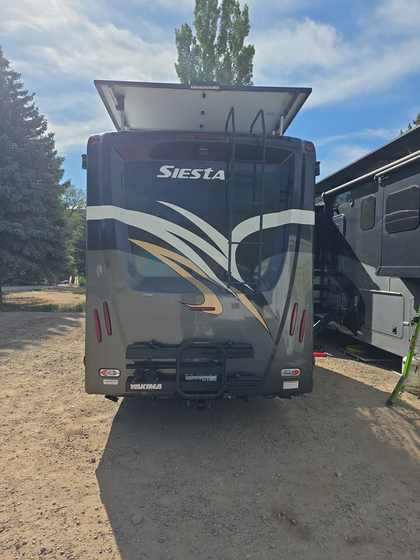
Short version: John wanted his 2017 Thor Motor Coach Siesta Sprinter 24ST to work off-grid without giving up any of the coach’s factory systems. Dan Hemmings of RV Solar Consulting designed a 48V Victron system, and we installed, programmed and commissioned it over about four days, finishing June 7, 2026.
The system
| Part | What we installed |
|---|---|
| Solar | 1,500 W rooftop array (three 500 W panels) |
| Battery | 10.24 kWh of 48V lithium (two 48V 100Ah server-rack batteries) |
| Inverter/charger | Victron MultiPlus-II 48/5000/70-95 |
| Solar charge controller | Victron SmartSolar MPPT 250/60 |
| Distribution and protection | Victron Lynx Distributor, Class-T main fuse, 400 A main disconnect, solar PV disconnect |
| Monitoring | Victron Cerbo GX with GX Touch 70 display, SmartShunt, VRM remote monitoring |
| A/C | Micro-Air EasyStart soft starter on the rooftop A/C |
| Also installed | Starlink mounted on the solar rail and powered from the inverter, exterior LED security lighting, Ring camera system |
Why 48 volts
A 48V system moves the same power at a quarter of the current of a 12V system. That means smaller cables, less heat and less voltage loss, and it lets a coach this size carry a 5,000 VA inverter/charger and a large battery bank without massive wiring. The batteries mount in a server rack layout that is compact for the energy it stores.
Keeping the factory systems
We didn’t rip out what Thor built. The original 12V house system and converter stay in service. The converter now runs from the inverter’s output, so the factory 12V battery keeps charging from solar like it always did from shore power. The Mercedes-Benz chassis, engine charging and vehicle electronics were not touched. Future technicians can follow both the factory documentation and the as-built wiring diagram we left with the coach.
The challenges
- The front roof cap. The design called for four panels. During install we found the front fiberglass fairing has no structure underneath that can hold a solar rail mount. A panel there would very likely have cracked the fiberglass, so we left it off and built the array with three panels. We’d rather tell a customer “not there” than leave a roof problem behind.
- Starlink that’s always on. John wanted the dish secure and usable at all times, with nothing to set up or take down. We mounted Starlink on the solar mounting rail, where it’s easy to reach if it ever needs service but never needs attention day to day. It runs from the inverter’s 120V output, so it’s available whenever the system is.
- Fitting a 5,000 VA inverter/charger in a Sprinter-based coach while keeping every component serviceable.
What John got
- A full build book: as-built wiring diagram, equipment list, fuse map with spare positions for future expansion, owner manuals and warranty information.
- Remote monitoring through Victron VRM, so we can help troubleshoot without being on site.
- A full commissioning, programming and walkthrough before he drove away.
Since the install
As of mid-September 2026, more than three months after completion, John’s system has had zero issues. In his words, he is “extremely happy with the system.” Like every customer, John has a direct line to the technician who built his system, (720) 277-7457, and VRM remote monitoring means we can look at the system with him without a trip.
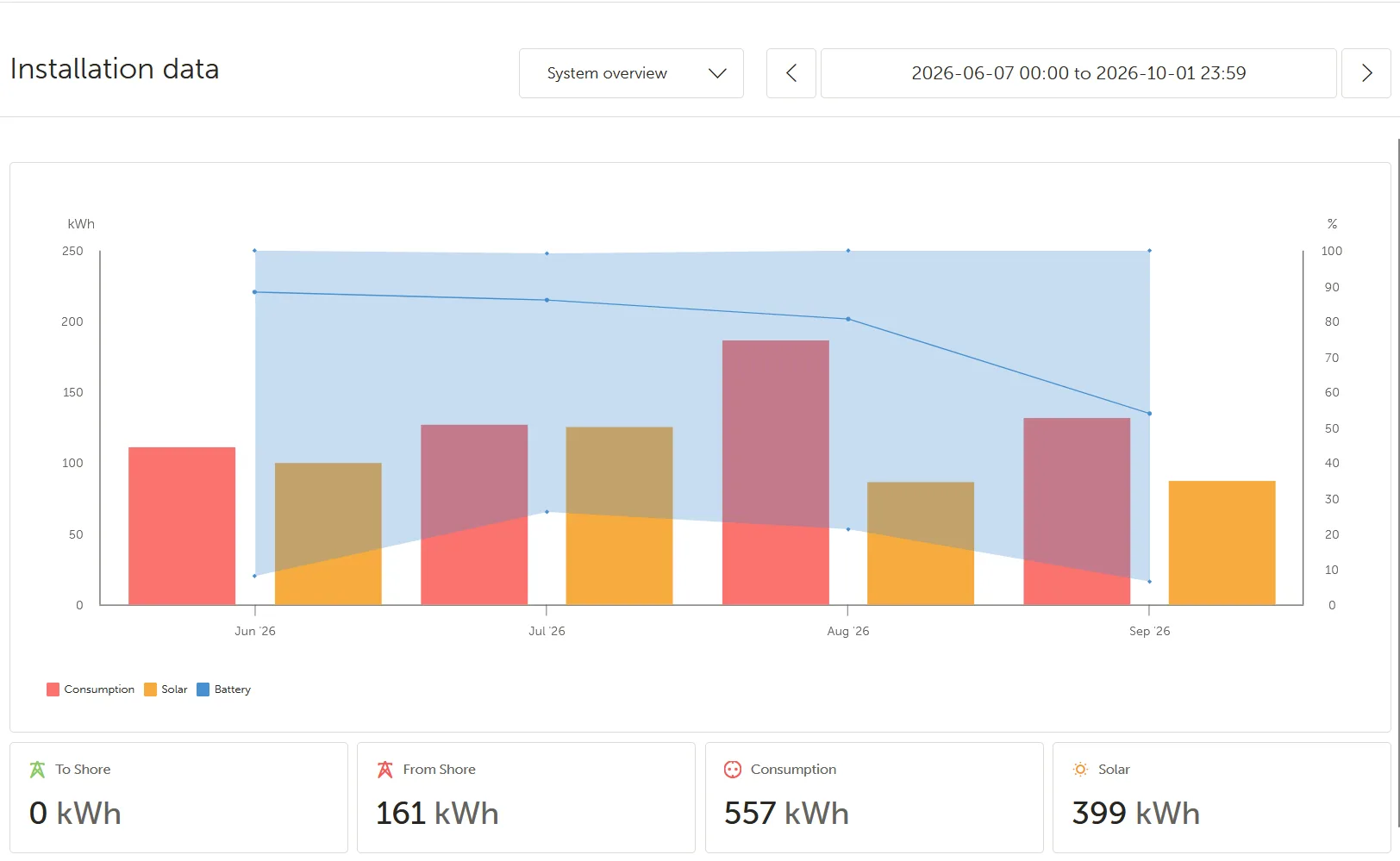
By the numbers (Victron VRM, June 7 to October 1, 2026):
| Total energy the coach used | 557 kWh |
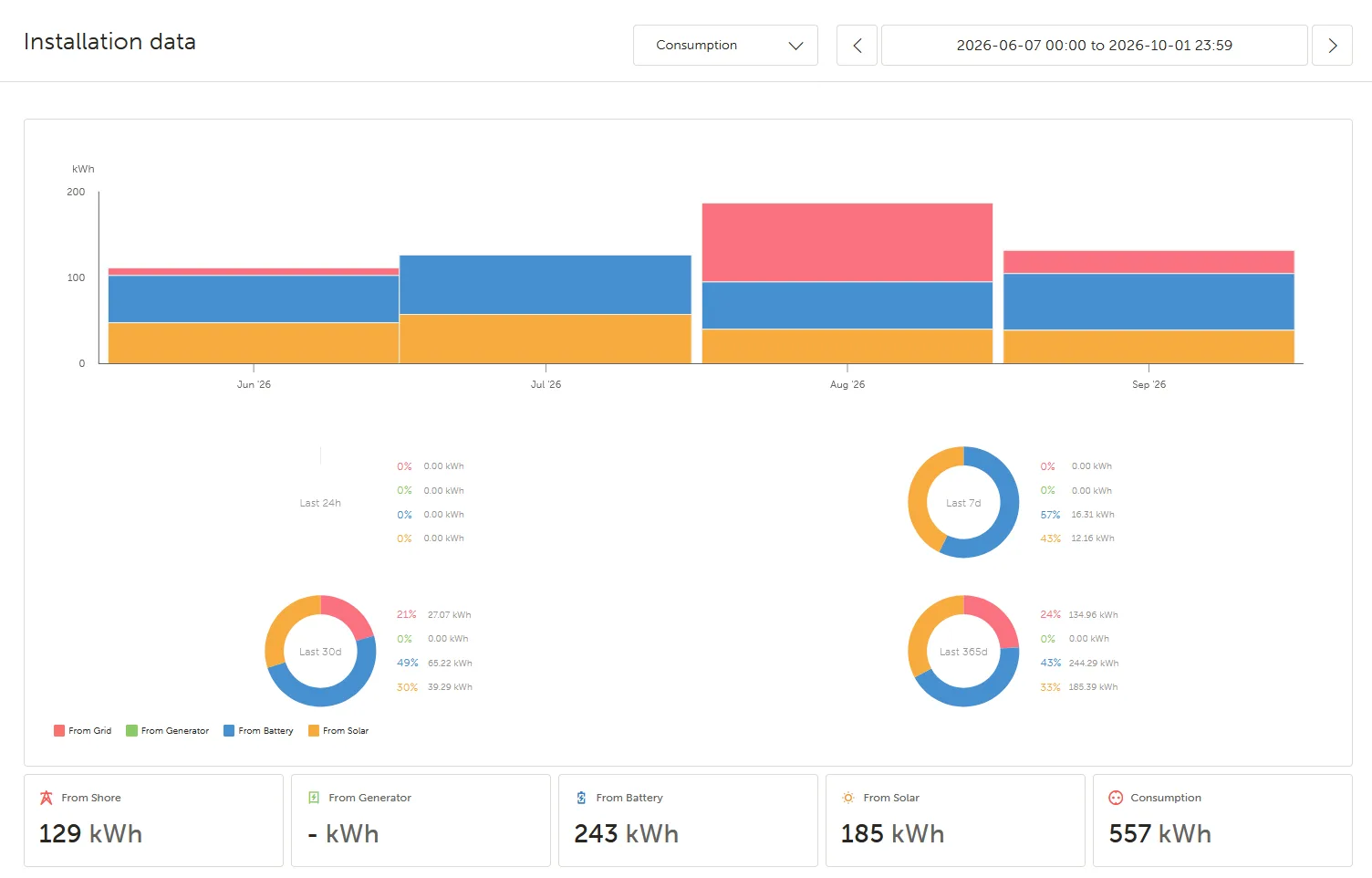
| Solar produced | 399 kWh (214 kWh stored in the battery, 185 kWh used directly) |
| Shore power used | 161 kWh |
| Generator | 0 kWh |
| Share of incoming power from solar | about 71% |
What stands out:
- The generator never ran. Not once in almost four months.
- July ran entirely on solar. No shore power at all for the whole month, while the coach used about 125 kWh.
- The battery carried the coach. 243 kWh of what John used came from the battery, most of it put there by the sun.
- About 3.4 kWh of solar a day from a 1,500 W array, through the hottest months of the year.
Because the system logs everything to Victron VRM, these numbers come straight from the equipment, not from an estimate.
Designed with RV Solar Consulting
Dan Hemmings of RV Solar Consulting designed the system; Live Free Mobile RV installed it. That partnership lets every build start from a professional design sized to how the customer actually camps.
Planning a system like John’s?
Book a solar design consultation. Learn more about our RV solar installation and system design, see Amy’s 24V truck camper build, or book online. We work on-site at your RV across the Yuma-area communities we serve.